Nanofiber News: Unraveling the Latest News and Breakthroughs in Nanotechnology
Discover the future of nanofiber materials with Nanofiber News - Your premier source for in-depth coverage, analysis, and insights into the revolutionary world of nanofiber technology. Scroll down to learn more about the latest nano-news, key industry players and technology breakthroughs.
What is nanofiber?
Nanofibers, characterized by their ultrafine diameters typically ranging from 1 to 100 nanometers, represent a class of materials with exceptional properties.
Produced through advanced techniques like electrospinning, wherein a polymer solution or melt is subjected to high voltage, nanofibers exhibit unique attributes due to their minuscule size compared to human hair.These nanoscale structures offer a remarkable surface area-to-volume ratio and high porosity, making them highly versatile across a spectrum of applications. In materials science, nanofibers are prized for their strength, flexibility, and low weight, finding utility in areas such as filtration systems where their efficiency in trapping particles and pollutants is paramount.
In the medical field, their biocompatibility positions nanofibers for applications in drug delivery, wound healing, and tissue engineering by closely mimicking the extracellular matrix of the body.Beyond this, nanofibers contribute to advancements in electronics, enabling the development of lightweight and flexible devices. In textiles, nanofibers enhance fabric performance by improving breathability and moisture-wicking capabilities.As a dynamic and cutting-edge material, nanofibers continue to propel innovation, holding promise for significant breakthroughs to accelerate even further in materials science, healthcare, and various technological domains in the future.
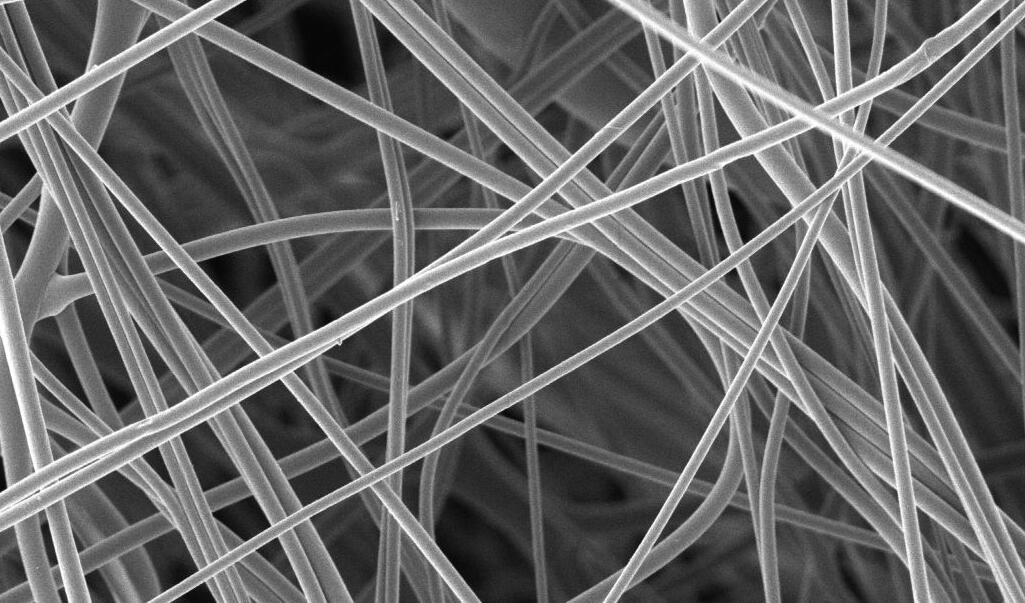
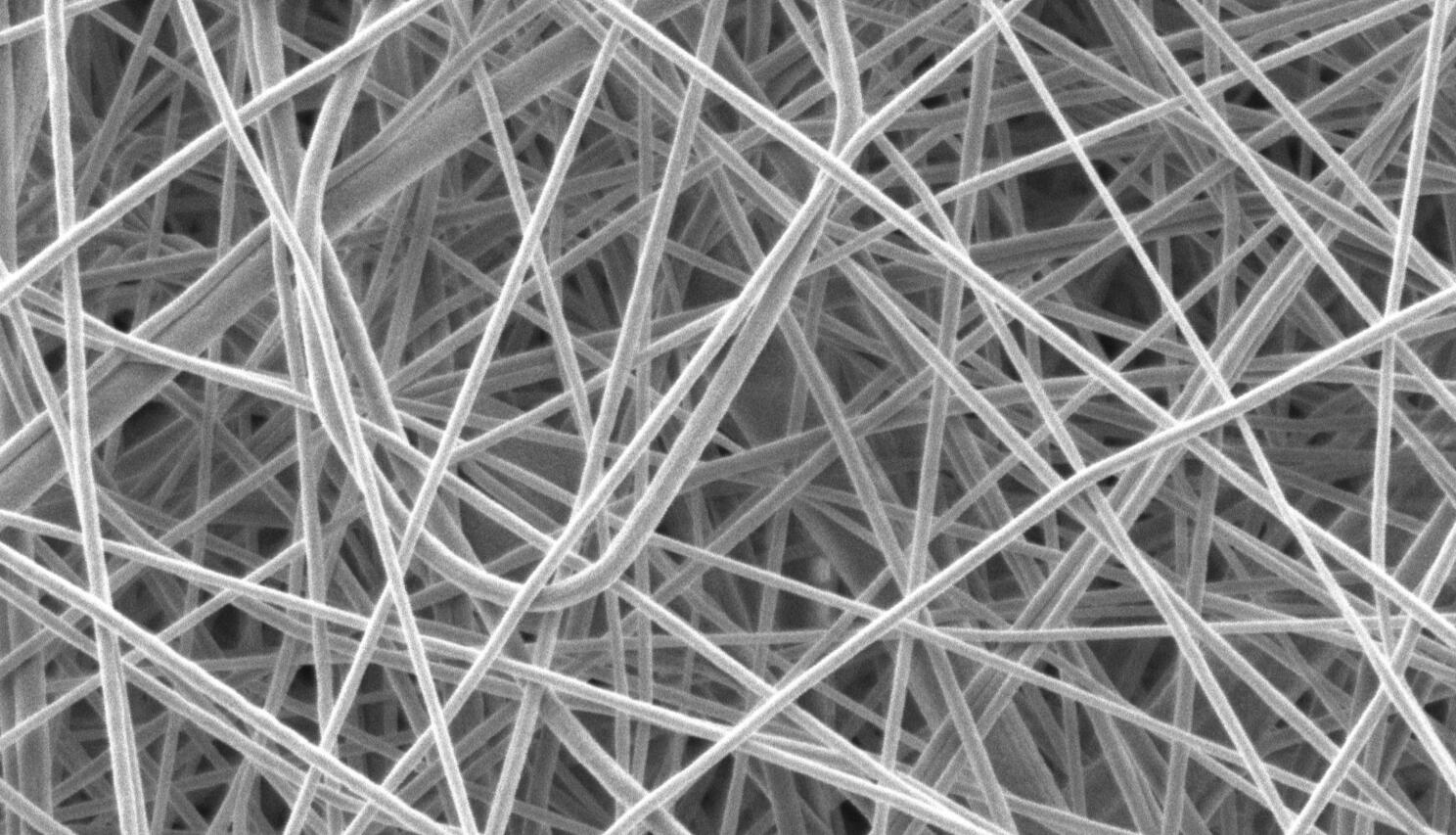
Above: SEM (Scanning-electron-microscope) images of PLA (left) and PVDF (right) nanofiber material at 1,000x magnification and 12,000x magnification respectively.
Rapid electrospun nanofiber manufacturing technologies
Ball-electrospinning Technology
Ball-electrospinning technology stands as a significant leap forward in the domain of nanofiber production, providing a novel and effective means of producing nanofibers at true commercial scale.
In contrast to traditional electrospinning methods, where polymer solutions are extruded through a single nozzle, ball-electrospinning introduces an entirely new approach.
This pioneering process employs a rotating ball as a spinning electrode, establishing a dynamic and precisely controlled environment for fiber formation.
The utilization of this technology enhances the accuracy and consistency of nanofiber production, facilitating the creation of materials with tailored properties suitable for diverse applications. More specifically it produces nanofiber at incredible scale.
Ball-electrospinning holds great promise in fields such as biomedical engineering, filtration, and a variety of other industries, opening avenues for the development of advanced materials with improved functionalities and performance. Its scalability and adaptability make it an appealing choice for researchers and industries seeking efficient and customizable solutions in the dynamic landscape of nanotechnology.
Leading Nanofiber Manufacturers/Suppliers
As the demand for nanofiber materials continues to grow across diverse industries, having reliable suppliers within this high-tech space becomes crucial for ensuring quality and innovation.
A multitude of companies worldwide are actively contributing to the nanofiber landscape, each with its unique expertise and offerings. From established industry leaders to emerging players, these suppliers play a pivotal role in providing the essential building blocks for applications ranging from advanced materials and filtration systems to biomedical devices and electronics.
In the subsequent list, we highlight some of the key nanofiber suppliers, showcasing their contributions to this dynamic field and the array of possibilities they bring to the forefront of cutting-edge technologies.